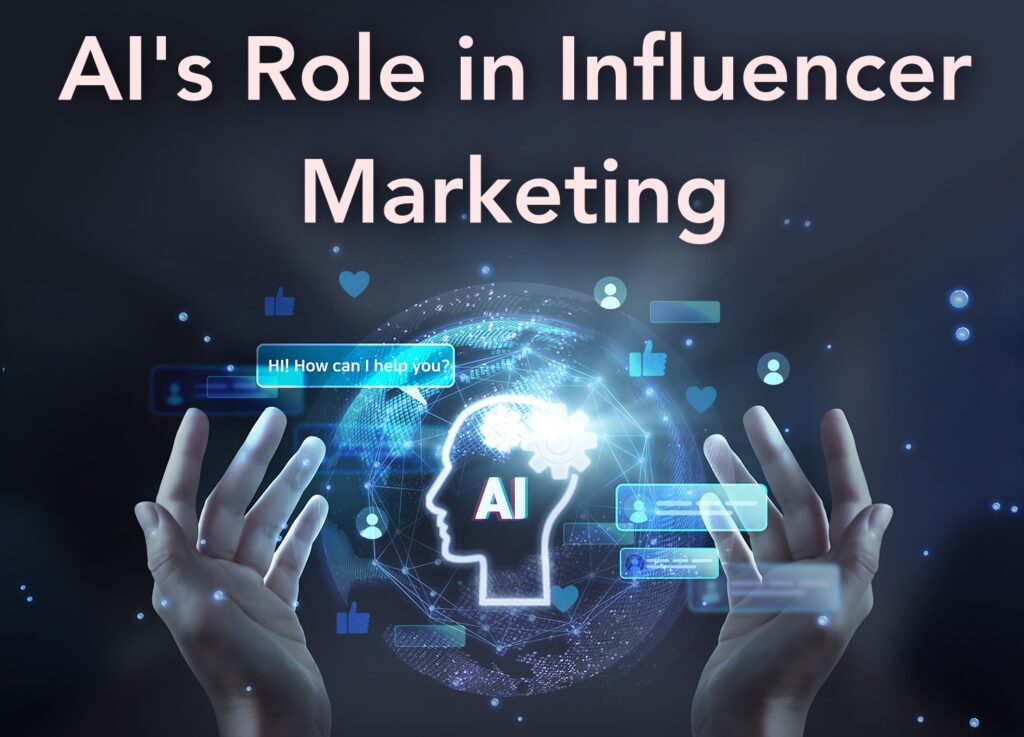
The Role of AI in Influencer Marketing
Introduction
Artificial intelligence (AI) is the future of technology, significantly impacting every field. From having been adopted by a few industries back in 2017 to now having a significant impact on almost all industries, Artificial Intelligence (AI) has taken over the world. According to Forbes magazine, the adoption of AI tools doubled from 2017 to 2022, and influencer marketing is no exception.
Influencer marketing is a powerful tool that lets businesses partner with individuals with extensive engagement and a list of followers on social media platforms. These influencers collaborate with businesses to help them reach their target audience by creating brand awareness and driving sales.
By now, we are all well-versed in the idea of influencer marketing. This idea has proven to be the most effective customer connection method. It has become so influential that online ads are reduced, and businesses are evolving from traditional methods to advanced ones.
Adopting AI in influencer marketing comes in handy to keep up with the pace of growing technology and the needs of businesses. The fusion of AI and influencer marketing creates a powerful duo transforming the influencer marketing landscape.
In this blog post, we will delve deeper to explore the role of AI in influencer marketing. We will also shed light on how brands can use influencer marketing to reach a broader audience and improve their influencer marketing campaigns.
Using AI to Connect and Identify the Right Influencers
One of the biggest challenges in influencer marketing is to identify the right influencers to partner with. Finding the right influencers in the vast ocean of social media for a specific campaign can be daunting. This is where Machine Learning, Artificial Intelligence, and Natural Language Processing come into play. These technologies help brands to use and transform influencer marketing.
AI is crucial in creating virtual influencers using advanced algorithms and ML techniques. These technologies help to create interactive and realistic digital personas.
AI influencer marketing can be fruitful in the following ways:
- Finding the right artificial intelligence influencer
Looking for the right influencer is as essential as running brand influencer marketing campaigns. If you manually search for the influencers and filter through millions of options, you may find it hectic and may need days or even months to get to the right one. AI tools can help you thoroughly research and find the right influencer in the blink of an eye.
- Creating logical and helpful processes for business operations
Brands with more than one campaign may find it tough to monitor the performance of every campaign. AI can help track campaign performance and help run business operations smoothly.
- Finding trends in marketing
AI tools can also help to quickly find the latest trends in the market and create a marketing strategy to stay ahead of the competition. The marketing strategy revolves around how the influencers can use the latest trends and beat the competition in the industry.
1. Profiling and Data Analysis
The first step in finding the right influencers is to analyze the profiles of influencers. This can be done using AI algorithms that foster profile analysis, including their posts, audience, and engagement demographics. These metrics provide a deeper insight into information that can help brands to align the influencer’s profile with their brand goals.
2. Identification of Bogus Influencers & Engagement
AI can also help detect the potential for business influencer fraud. It gives businesses a deeper look into the influences beyond the readily available stats. AI helps weed out profiles filled with purchased followers and bots so they can guarantee the best reach and engagement with real followers.
Although influencer marketing is a trending marketing niche, many influencers are using ways to manipulate their profile statistics. However, AI can help combat this fraud by delving deeper into the analytics of the influencer’s profiles and decoding any potential flaws.
3. Granting Control to Influencers
AI lets the brands enjoy complete control by letting influencers handle brand portrayal. If you entrust an influencer to present and bring a brand to the limelight, it can even backfire if the wrong individual is chosen. By employing deep search capabilities, AI tools can identify the right influences to mitigate potential risks.
Predicting Campaign Success
Once the right influencers are identified, the next step is to predict the success of the campaigns they are working on. It is another challenge for businesses who want to ensure they are investing their time, energy and hard-earned cash in the influencers who will deliver results.
1. Performance Evaluation
AI can also help businesses to analyze past data of the campaigns and thus predict and analyze the current performance of AI influencers. It helps to predict how well a campaign can perform based on specific parameters such as influencer’s credibility, audience engagement, content type, and timings. Brands can use these predictions to effectively tune their strategies and allocate the required resources.
2. Content Optimization
AI-powered tools can help influencers see content improvement suggestions. These suggestions give data based on real-time analysis. These suggestions include choosing words, creating engaging post captions, choosing the right time to post the content, and targeting the right audience to fast-track the brand’s success. AI can give insights to optimize this data and get maximum engagement by resonating with the target audience’s interests.
Measure ROI in Influencer Marketing
When the right tools and resources are chosen, and the campaign is on fire, the final wait comes, getting ROI against the struggle. Traditionally, measuring ROI has been a hefty job as brands need to track various metrics such as sales, reach and engagement to determine whether a campaign has succeeded.
It is yet another ground where AI-enabled influencer marketing plays a vital role. Automating data collection and analysis processes helps to measure the ROI more effectively. These tools can provide additional insights into traffic, sales, and brand awareness campaigns.
1. Measure ROI
AI algorithms can help to track ROI using various metrics. By identifying these metrics, AI can help correlate campaign costs, and brands can calculate the exact ROI a campaign can generate.
2. CLV (Customer Lifetime Value) Prediction
AI can predict the Customer Lifetime Value of Consumers gained through influencer marketing. This prediction helps brands analyze influencer-driver campaigns’ long-term value and potential profit. It also aids marketers to make a strategic decision for future campaigns.
Challenges
Although AI has great potential in this field, a question might hit your mind: is it an opportunity or a threat to influencer marketing? AI has exciting potential, but it has pros and cons like any other technology.
1. Maintaining Authenticity and Misinformation
While AI can deliver highly engaging and emotional content that can drive an audience, brands must also consider the authenticity of AI-generated content. A report shows that almost 75% of people are concerned about the misinformation spread through AI-generated content.
The deepfakes AI creates can blur the lines between original and fabricated content. Thus, there must be a balance between using technology to draw precisions and authenticating influencer-based relationships.
2. Brand Safety
Another concern that we see is the brand’s safety. As AI content creation tools are easily and readily available, they are raising concerns that the data may not comply with privacy regulations. Thus, your team must actively ensure brand safety and quality control.
Future Trends
Although AI influencer marketing is less abundant than traditional influencer marketing, it cannot be said for the future. AI is in the early stages of development in the influencer marketing industry. Still, it holds tremendous potential to revolutionize how businesses interact with consumers and work with influencers for the greater good.
We can expect AI to help brands generate more focused and personalized campaigns. AI can make influencer marketing more efficient, effective, and measurable. Moreover, AI can help develop new and innovative marketing campaigns and create interactive influencer marketing experiences.
The trajectory of AI in influencer marketing is phenomenal, and we hope to experience the following developments shortly:
1- Enhanced Personalization
AI can help increase personalization for every consumer. By doing so, every consumer would be able to receive highly tailored recommendations and campaigns that resonate exactly with their interest and user preferences.
2- Voice and Video Integration
With AI, real-time campaign adjustments can be enabled. This will facilitate brands to adjust based on ongoing performance analysis and will help to optimize results.
3- Real-time Campaign Optimization
AI will also help integrate audio and video content analysis and broaden the scope of influencer marketing. This will help analyze media content, and thus, brands could leverage the full potential of AI.
Conclusion
In a nutshell, AI is fundamentally changing the scope of influencer marketing by making it more effective and efficient. The future of AI bears immense potential, with AI and human synergy integrating to open new doors of glory and deliver impactful and authentic campaigns. As technology is evolving, AI is no longer an option for businesses, somewhat, it has become a necessity for brands that are striving to stay ahead in the competition of the digital globe.